For decades, the web browser has been a simple “window” to the internet. You use it to go to information. Now, AI is fundamentally reshaping that paradigm, turning the browser into a proactive “assistant” that helps you understand, process, and even act on that information.
This past week, the “AI Browser Wars” officially ignited. OpenAI, the creator of ChatGPT, has launched its highly anticipated ChatGPT Atlas browser, taking direct aim at the reigning new champion, Perplexity AI’s Comet.
This isn’t just another search engine battle; it’s a fight for the future of how we interact with the web. We’re here to break down the two main contenders, their core philosophies, and help you decide which one deserves to be your new default.
At a Glance: Atlas vs. Comet
| Feature | ChatGPT Atlas (from OpenAI) | Perplexity Comet (from Perplexity AI) |
|---|---|---|
| Core Philosophy | The “Do-er” | The “Researcher” |
| Best For | Task automation & executing multi-step commands | Verifiable answers & in-depth research |
| Killer Feature | Agent Mode: Can take actions across websites | AI Answer Engine with Citations |
| Hallmark | “Memory” and deep ChatGPT ecosystem integration | All answers are backed by verifiable sources |
| Tech Foundation | Chromium | Chromium |
| Pricing Model | Free (basic), core features require paid subscription (Plus/Pro) | Robust free tier, with an optional paid Plus subscription |
| Current Platforms | macOS (at launch) | Windows, macOS |
Deep Dive: Perplexity Comet — Your “Personal Researcher”
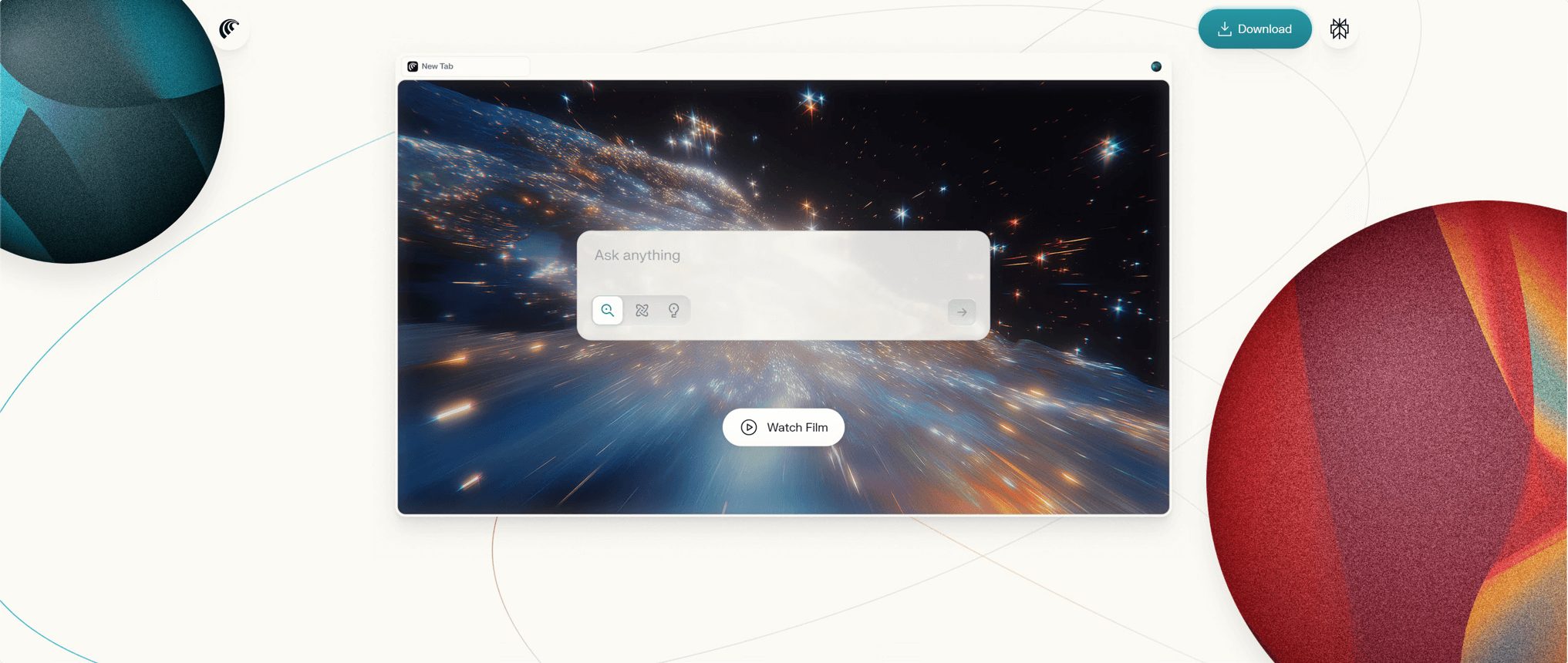
Comet was born from Perplexity’s AI search engine, which was built to solve the core problems of traditional search: “information overload” and “unreliable answers.”
- AI Answer Engine: Comet’s core experience is “answer-first.” When you search, it doesn’t just give you 10 blue links. It scours the web and provides a synthesized, comprehensive answer to your query.
- Verifiable Citations: This is Comet’s universally-praised, hallmark feature. Every single statement in its AI-generated answer is clearly footnoted with a link to the source it came from. For students, researchers, writers, or anyone who needs to fact-check information, this is invaluable.
- Research-Oriented Workflow: Comet is built for deep work. It excels at summarizing web pages, understanding context across multiple tabs, and helping you organize and discover new branches of information.
In short: Comet wants to be your most powerful research assistant, helping you find, understand, and verify high-quality information in the shortest amount of time.
The Advantage: Comet’s free tier is incredibly powerful and provides all its core functionality, making it far more accessible than Atlas.
Deep Dive: ChatGPT Atlas — Your “Digital Executor”
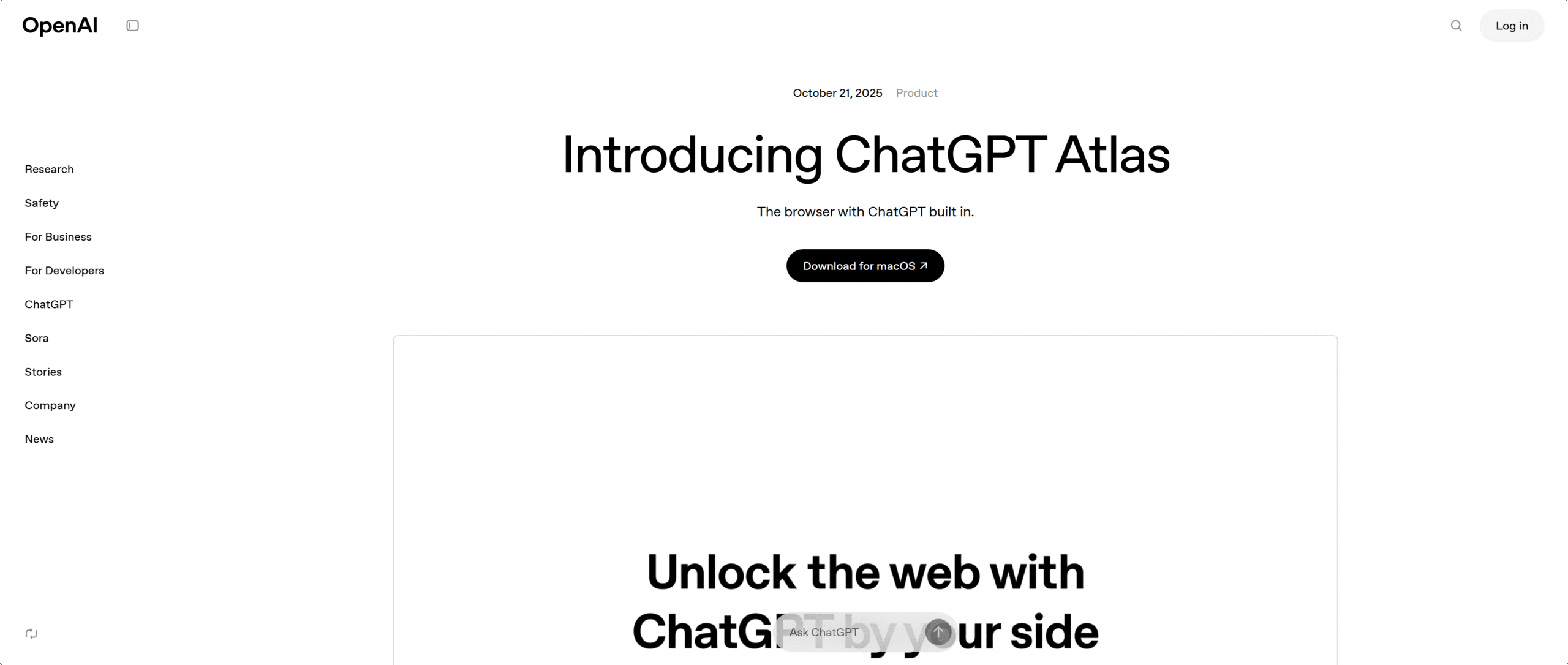
Atlas is not just “Chrome with a ChatGPT sidebar.” OpenAI describes it as a browser “built entirely around ChatGPT.” Its philosophy is built on three pillars:
- Chat: A persistent sidebar that understands the context of the page you’re on. You can ask it to “summarize this article” or “help me draft a reply to this email.”
- Memory: This is a key feature. Atlas remembers your previous conversations and browsing history (you can turn this off or delete memories) to provide truly personal assistance. You can ask it, “Find those sneakers I was looking at last week,” and it can pull from its memory.
- Agent Mode: This is the true killer feature. This is where Atlas stops being just an assistant and becomes an agent. You can give it a multi-step, complex command like, “Plan a 5-day trip to Tokyo, find flight and hotel options, and add the itinerary to my calendar.” Atlas will attempt to navigate across different sites to execute this task for you.
In short: Atlas wants to be your digital valet, helping you complete tasks online, not just find information.
The Catch: Its most powerful feature, “Agent Mode,” is a premium feature, requiring a ChatGPT Plus or Pro subscription. This makes its free offering far less compelling.
Head-to-Head: The Key Differences
1. Philosophy: The “Do-er” vs. The “Researcher”
This is the most critical distinction.
- If you want your browser to book a flight for you, you want Atlas.
- If you want your browser to explain the aviation industry’s latest financial reports with data sources, you want Comet.
2. Ecosystem vs. Standalone Tool
- Atlas is a natural extension of the OpenAI ecosystem. If you are already a heavy ChatGPT user, its workflow will feel like a seamless upgrade.
- Comet feels more like a dedicated, best-in-class tool for research. It has attracted a loyal following of academics, journalists, and professionals who value its “accuracy and sourcing” above all else.
3. Cost and Accessibility
- Comet is extremely generous with its free tier. You can use its core “answer engine” without paying a dime.
- Atlas uses its free tier as a teaser. Its most revolutionary features are locked behind the existing ChatGPT Plus/Pro paywall.
4. Security and Privacy
This is a brand new battlefield. For an AI agent to “act” on your behalf, it needs deep access to your web content, creating new risks like “prompt injection attacks.”
- Comet has already faced public security audits (from teams like Brave) that pointed out vulnerabilities, which Perplexity has since worked to patch.
- Atlas is new, but its powerful “Agent Mode” theoretically faces the same, if not steeper, security challenges. This will be a critical area to watch.
The Verdict: Which AI Browser Should You Choose?
Your choice will come down to what you fundamentally want your browser to do for you.
Choose ChatGPT Atlas If…
- You are already a paid ChatGPT Plus or Pro subscriber.
- Your primary need is automation and task execution.
- You want a true “personal assistant” that learns from you over time.
- You are on a macOS (for now).
Choose Perplexity Comet If…
- You are a student, researcher, writer, or professional who needs verifiable information.
- You are tired of Google’s “10 blue links” and ad-filled results.
- You want the best-in-class AI search and summarization for free.
- You value accuracy and trustworthy sources over task automation.
Final Thought
The launch of Atlas and Comet signals a new era. The browser is no longer just a tool; it’s a partner. Atlas is the ambitious, powerful executor, while Comet is the rigorous, dependable researcher. Whichever you choose, one thing is clear: the days of static, passive web browsing are over.
Experience the “Researcher” for Yourself
As this article highlights, Perplexity Comet is the clear winner for anyone who needs fast, accurate, and verifiable answers. Stop digging through ads and get the information you actually need.
(It’s the powerful free tier I use for all my research!)